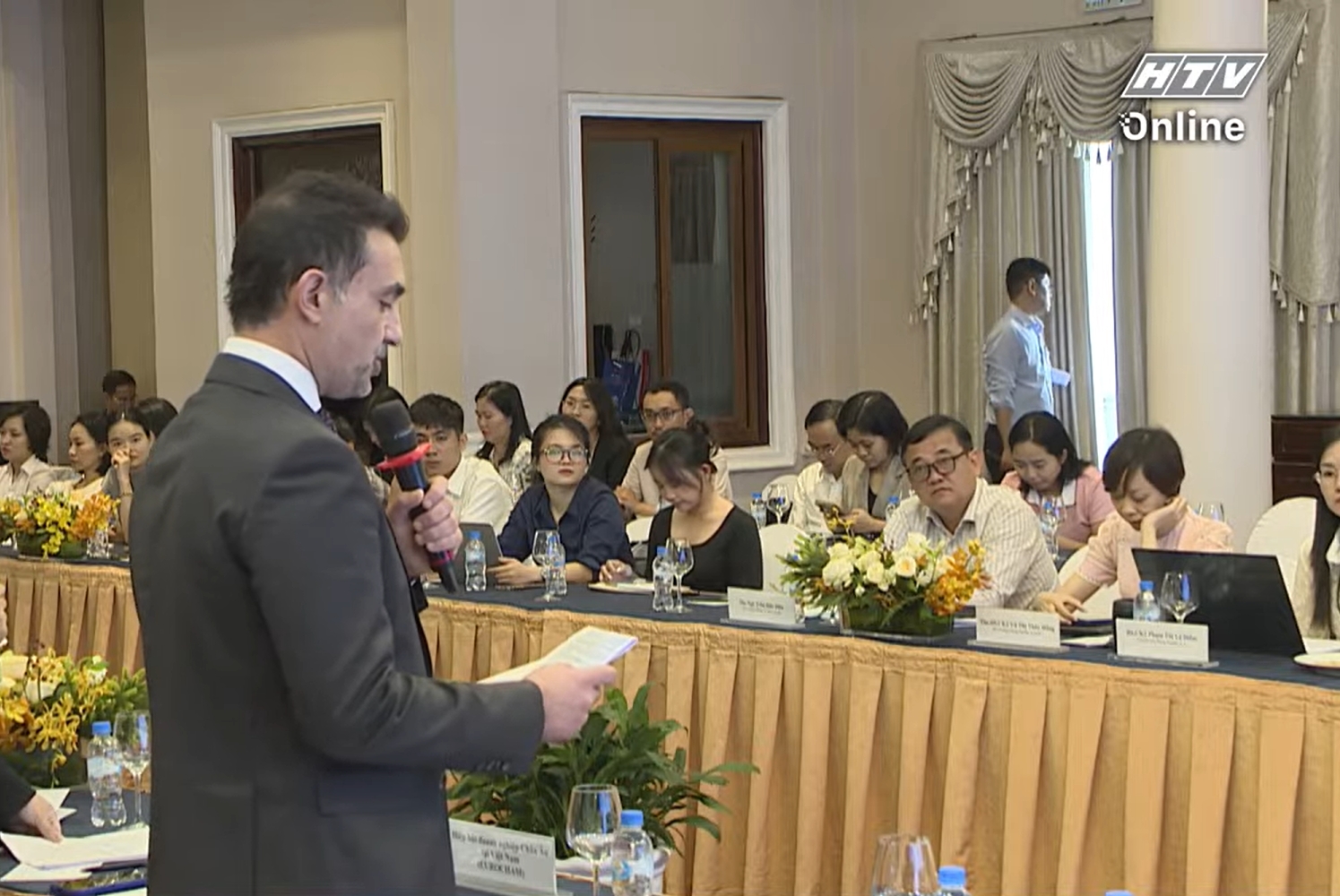
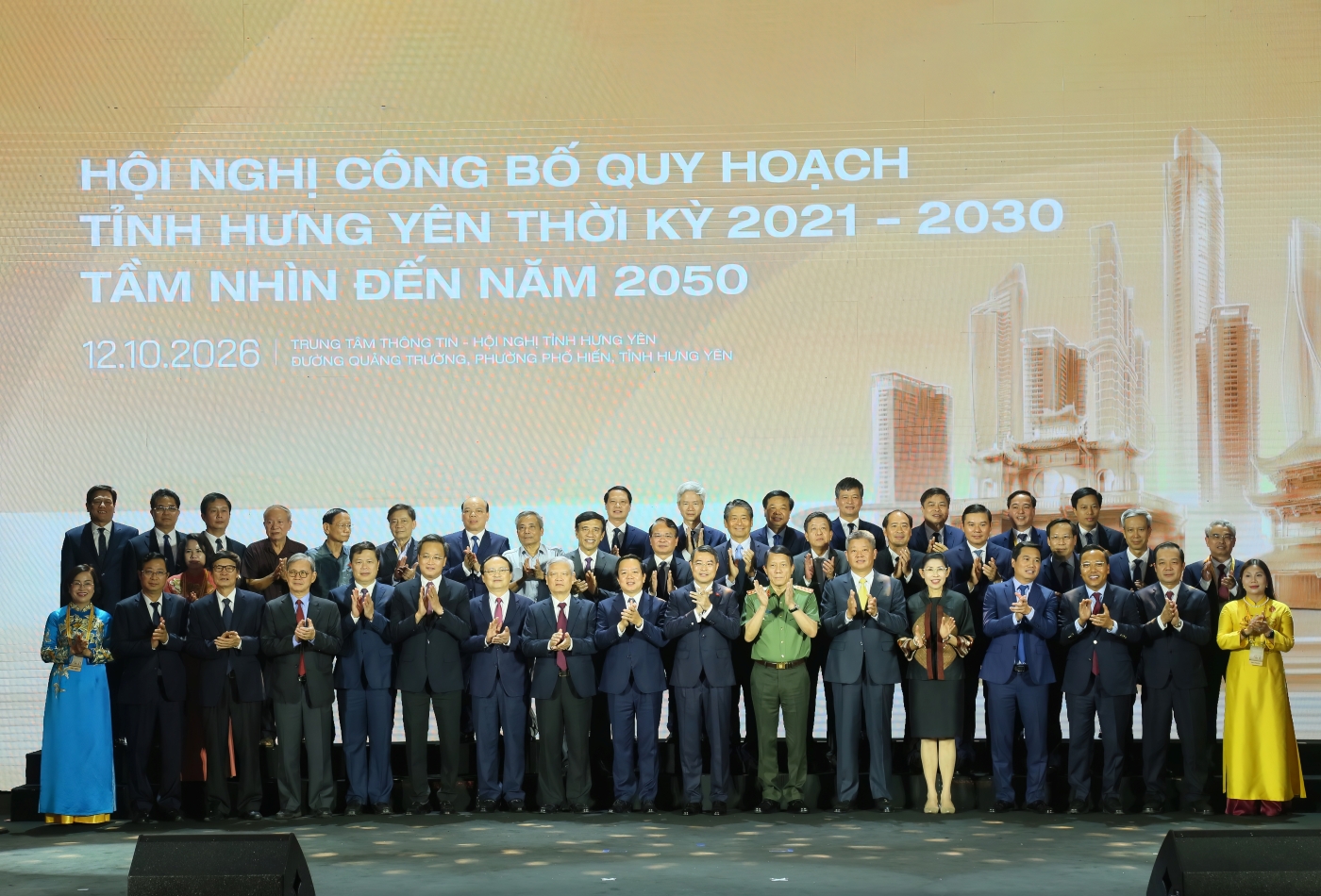
On 12 October 2026, EuroCham Vietnam representatives attended the conference announcing Hung Yen’s Provincial Development Plan for 2021–2030, with a vision to 2050. Organised by the Hung Yen Provincial People’s Committee, the conference brought together Prime Minister Le Minh Hung, provincial leaders, representatives of diplomatic missions, business associations, and domestic and international businesses and investors.
Representing EuroCham were Vice-Chair Minh Nguyen, Advisory Board Member Claudia Anselmi, and Head of Office Hanoi and External Relations Manager Van Nguyen.
The conference presented Hung Yen’s development vision following the merger of Hung Yen and Thai Binh provinces in July 2025, highlighting the opportunities arising from its expanded economic scale, industrial base, and coastal development potential.
Hung Yen’s Development Vision: Sustainable Growth and Modern Infrastructure
Under the adjusted provincial plan approved in February 2026, Hung Yen aims to become a dynamic province with rapid and sustainable economic growth by 2030, driven by science and technology, innovation, digital transformation, and green development. The plan also emphasises modern infrastructure, environmental protection, energy security, improved living standards, and the preservation of cultural identity.
The province has set ambitious economic targets for 2030, including average annual gross regional domestic product growth of 10–11% during 2026–2030, with an aspiration to exceed 11%. Gross regional domestic product per capita is targeted to surpass VND 209 million, equivalent to approximately USD 8,000, while the urbanisation rate is expected to exceed 55%.
To achieve these ambitions, the plan identifies five key development pillars:
- Integrated infrastructure development, prioritising transport networks, industrial parks, industrial clusters, and economic zones.
- Clean and high-tech agriculture, promoting ecological farming and large-scale commercial production.
- Urban, commercial, tourism, and service development, strengthening the province’s urban centres and service economy.
- Clean energy development, including wind power, liquefied natural gas-fired power, and green hydrogen.
- Marine economic development, building a modern, multi-sector coastal economic zone.
The plan also establishes three economic regions and two development corridors, supported by strategic transport axes. The northern region is envisioned as a centre for industry, urban development, services, and high-tech logistics. The central region will serve as an administrative, cultural, and educational hub, while the eastern and south-eastern coastal areas are expected to become new growth drivers for marine industries, energy, manufacturing, port logistics, and coastal tourism.
Prime Minister Le Minh Hung: Turning Planning into Practical Results
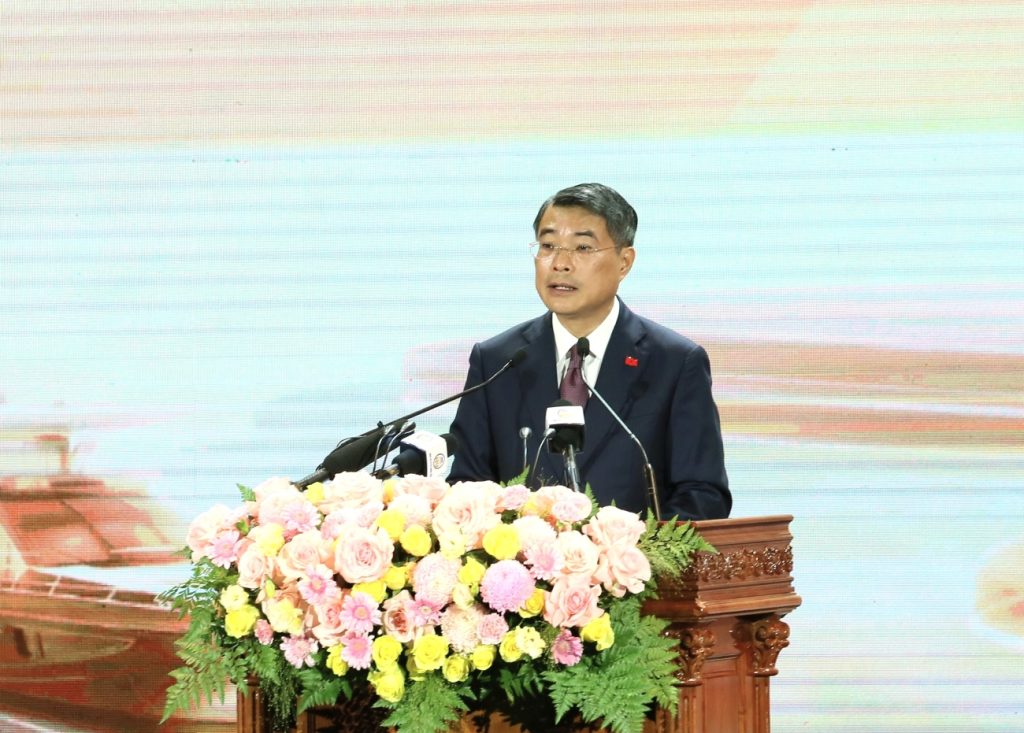
In his keynote address, Prime Minister Le Minh Hung emphasised that the merger of Hung Yen and Thai Binh had created a broader development space, combining complementary strengths and opening new opportunities in industry, services, energy, logistics, and the marine economy.
He called for a shift in planning from simply exploiting existing resources towards creating and unlocking new development opportunities. He also stressed the importance of integrated regional development, stronger links between economic centres, and better coordination across development corridors and urban networks.
The Prime Minister highlighted four key priorities: maximising the province’s geographical and economic advantages through regional connectivity; organising development around integrated economic regions and growth centres; shifting towards a development model driven by science, technology, innovation, digital transformation, and skilled human resources; and placing people, culture, and balanced economic, social, and environmental development at the centre of the province’s long-term vision.
He further underscored that good planning is necessary, but effective implementation is what ultimately determines success. The provincial plan must therefore be translated into concrete programmes, projects, resources, and measurable results. Priorities include improving strategic transport connections, developing high-tech and green industries, attracting selective foreign investment, expanding high-value services such as logistics, and modernising agriculture.
Hung Yen People’s Committee Chairman Nguyen Manh Quyen: Creating an Enabling Environment for Business
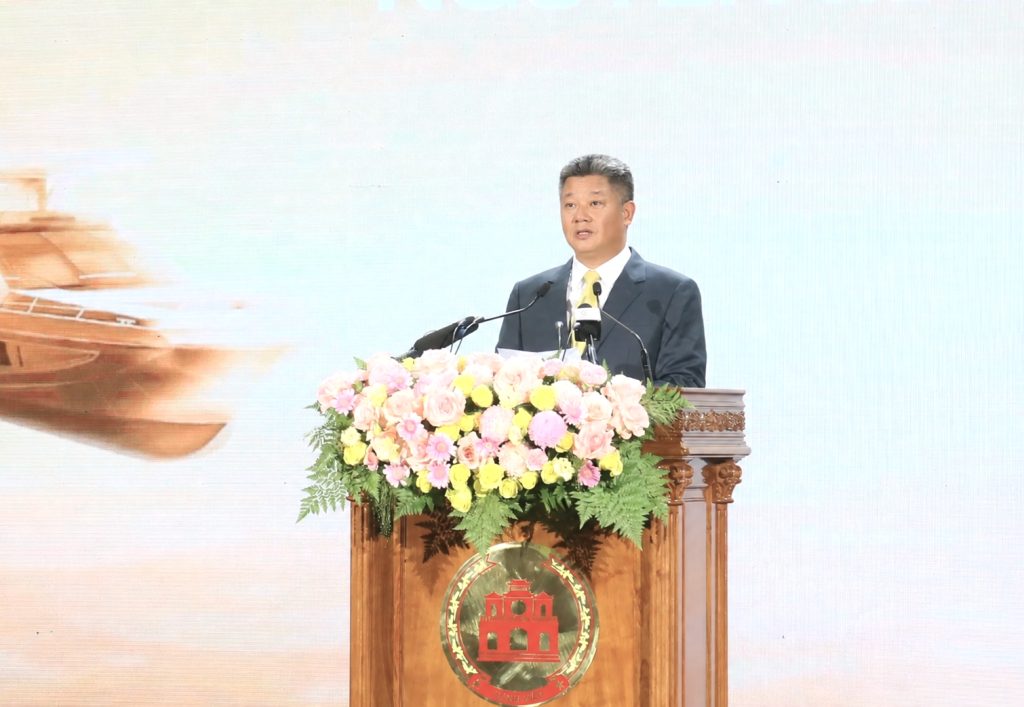
In his opening remarks, Nguyen Manh Quyen, Chairman of the Hung Yen Provincial People’s Committee, described the conference as an important milestone in the province’s development following the merger. The expanded territory provides opportunities to connect the strengths of different areas and unlock further growth in industry, urban development, services, logistics, and the marine economy.
He highlighted the province’s efforts to develop strategic transport infrastructure, including routes connecting Hung Yen with Hanoi and other provinces in the Red River Delta. The province is also advancing plans for a high-tech park and projects to restore and recreate the historic Pho Hien area.
The Chairman noted that the new planning framework had already encouraged domestic and international businesses to explore investment opportunities in Hung Yen. He stressed that the value of the plan would ultimately be demonstrated through tangible development projects and economic results.
Reaffirming the province’s commitment to working closely with the business community, he emphasised the principle that business success is the province’s success. Hung Yen aims to build a transparent, safe, and favourable investment and business environment, supporting companies and investors in pursuing long-term, sustainable growth.
Opportunities for EuroCham Members
Hung Yen’s development priorities point to potential opportunities for businesses operating in or considering investment in the region, particularly in manufacturing, high-tech industries, green energy, logistics, infrastructure, and sustainable agriculture.
The province’s emphasis on regional connectivity, digital transformation, and higher-value economic activities also creates opportunities for collaboration between local authorities and international businesses with relevant expertise, technologies, and investment capabilities.
EuroCham’s participation in the conference reflects its continued engagement with provincial authorities and the wider business community. By following regional development plans and maintaining dialogue with local stakeholders, EuroCham seeks to help its members stay informed of emerging opportunities and support stronger connections between European businesses and Vietnam’s growing regional economies.