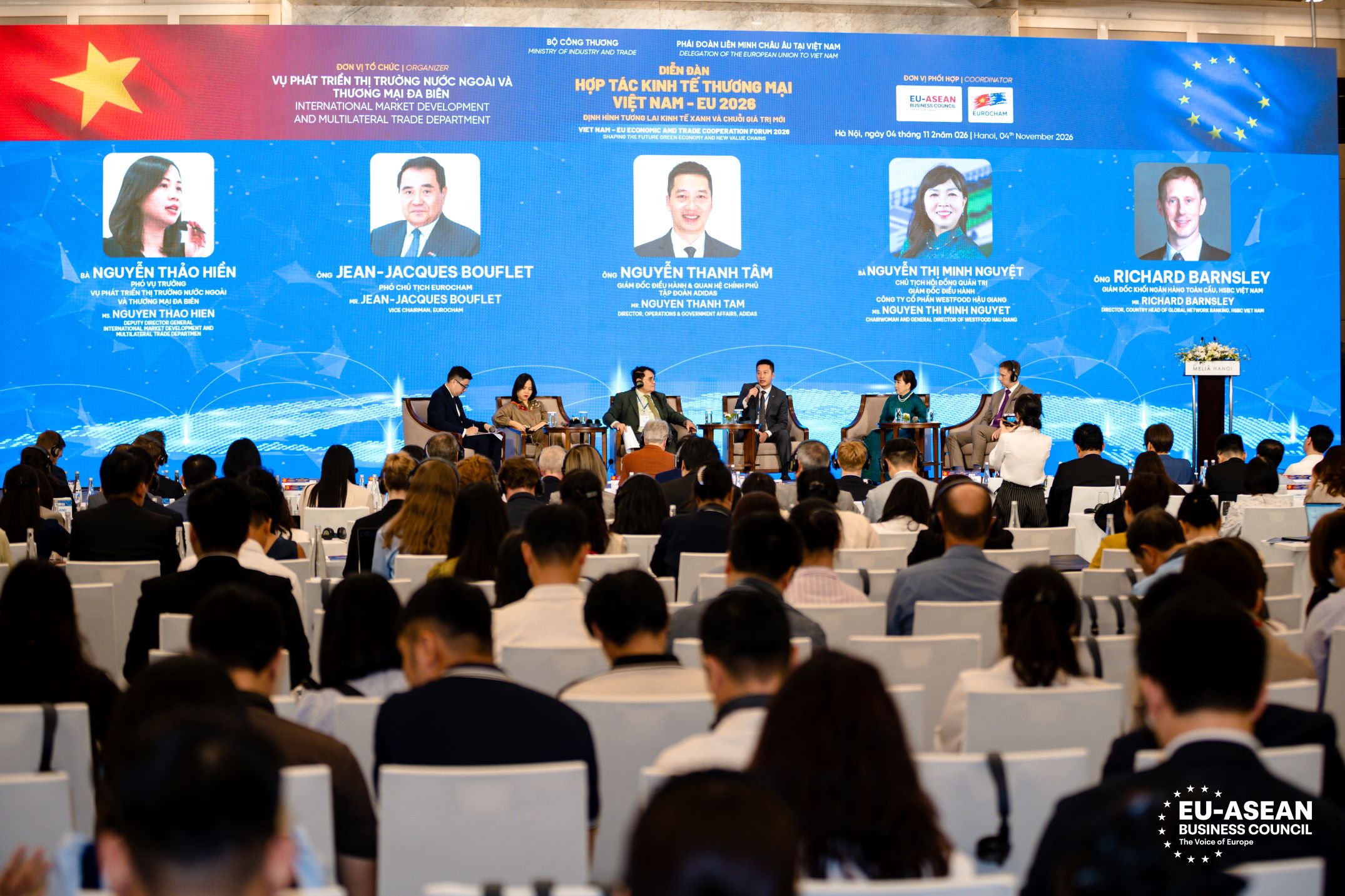
On 4 November, in Hanoi, the Ministry of Industry and Trade (MOIT), in coordination with the Delegation of the European Union (EU) to Vietnam, the EU-ASEAN Business Council (EU-ABC) and the European Chamber of Commerce in Vietnam (EuroCham), organised the Vietnam–EU Economic and Trade Cooperation Forum 2026 under the theme “Shaping the Future of the Green Economy and New Value Chains”.
The EVFTA success and Vietnam’s priorities
In his opening remarks, Deputy Minister of Industry and Trade Luong Hoang Thai highlighted that bilateral trade between Vietnam and the European market had exceeded USD 65.48 billion and continued to grow following more than six years of implementation of the EU–Vietnam Free Trade Agreement (EVFTA). The EVFTA has indeed become an important foundation enabling Vietnamese exports to meet technical standards and gain broader access to the markets of all 27 EU Member States.
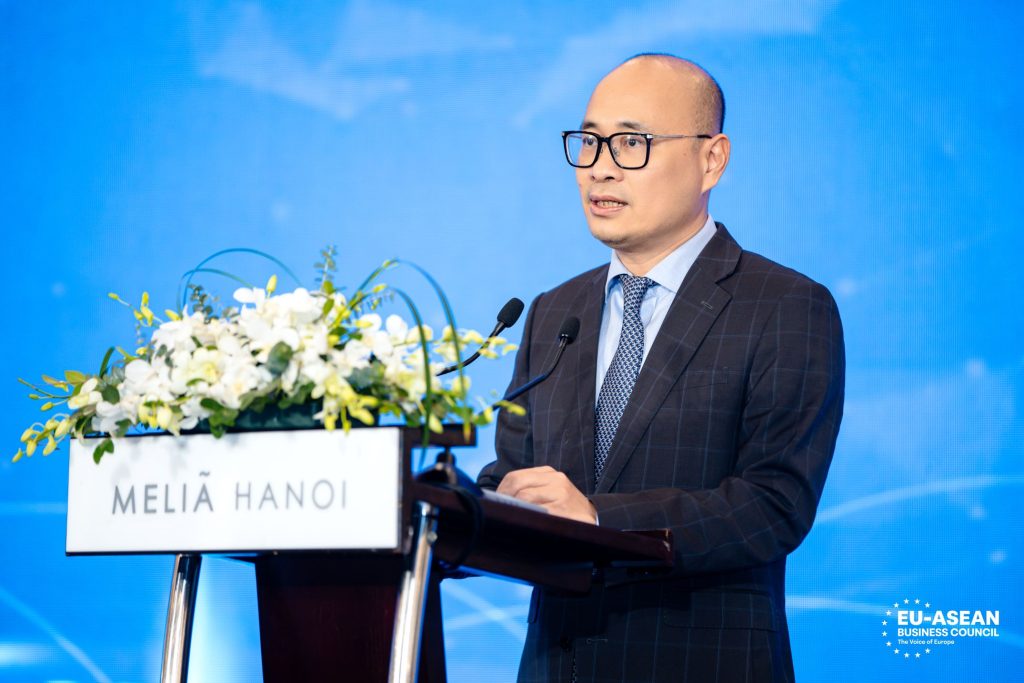
As Vietnam enters a new phase of development, the Deputy Minister affirmed that the country is prioritising green & sustainable supply chains, resilience against unpredictable global developments, transition to clean energy, and application of circular economy technologies across key industrial manufacturing sectors.
Deputy Minister Luong Hoang Thai expressed his expectation that EuroCham and EU-ABC would continue to strengthen their role as bridges between businesses and policymakers, connecting European resources and Vietnam’s manufacturing capabilities.
He also reaffirmed that Vietnam would create favourable conditions and establish a transparent and stable business environment, enabling the business community in general, and international enterprises, including European partners, to operate with confidence and achieve sustainable, long-term success in Vietnam.
Vietnam – EU cooperation: the road ahead
Following the opening remarks, Ambassador of the EU and Head of the Delegation of the European Union to Vietnam Julien Guerrier, reaffirmed that the EU had always regarded Vietnam as one of its leading partners in the region, particularly following the recent elevation of bilateral relations to a Comprehensive Strategic Partnership.
Ambassador Julien Guerrier emphasised that the recent visit to the Kingdom of Belgium by General Secretary and President H.E. To Lam in October had provided strong political momentum for the further development of bilateral relations. He also commended Vietnam’s development ambitions, particularly its goals of becoming a developed, high-income country by 2045 and achieving net-zero emissions by 2050.
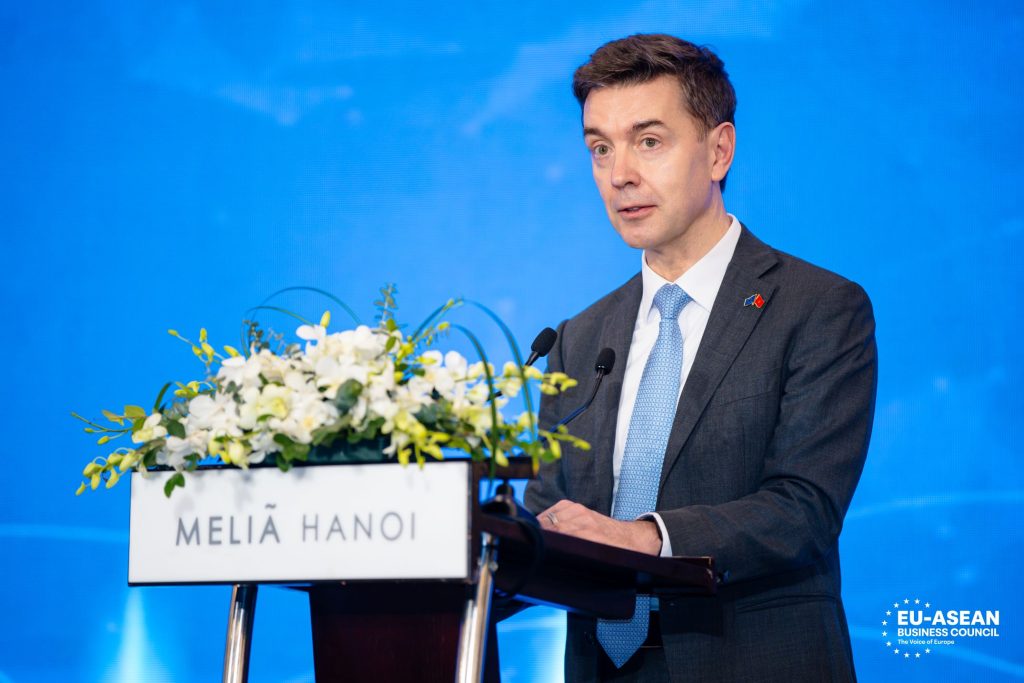
The Ambassador noted that the EVFTA continued to serve as a solid economic pillar, making Vietnam the EU’s largest trading partner within ASEAN and its 16th largest trading partner globally. To fully realise the potential of the EVFTA, Ambassador Guerrier underscored the importance of maintaining a stable, transparent and consistent investment environment, ensuring fair market access, and safeguarding intellectual property rights and technological know-how. These conditions would help strengthen the confidence of European businesses, particularly small and medium-sized enterprises (SMEs).
European businesses recognise Vietnam’s competitive advantages
Representing the European business community, EU-ASEAN Business Council (EU-ABC) Vice-Chair Noel Clehane noted that the majority of European businesses operated across the ASEAN region. Within this regional landscape, Vietnam held compelling competitive advantages, underpinned by its established industrial manufacturing base and proven export capabilities.
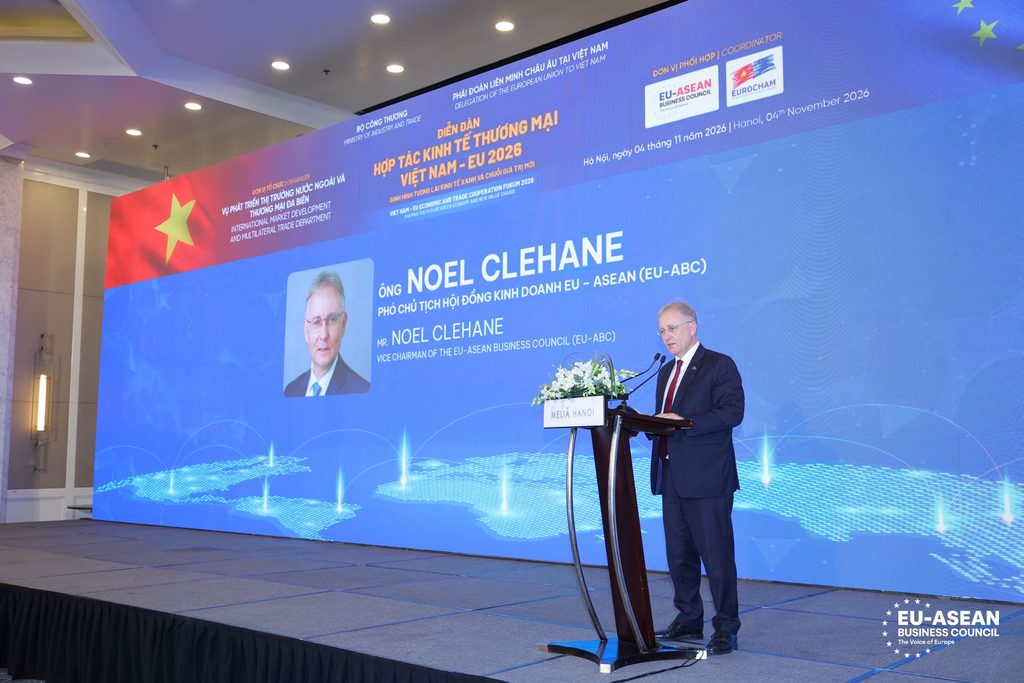
Vice Chairman Noel Clehane explained that beyond financial capital, the value of European investment also lies in bringing advanced technologies, management expertise and support for the training and development of a highly skilled workforce. He also highlighted that Vietnam was well positioned to attract greater inflows of high-quality investment and generate higher added value in the coming years.
On this occasion, he emphasised that modern value chains must become greener, as sustainability was now directly linked to competitiveness and the ability to access international markets. This presented significant opportunities for cooperation between Vietnam and its European partners in clean manufacturing, energy transition, sustainable logistics and green finance.
Representing European businesses, EuroCham Vice-Chair Torben Minko also commended Vietnam’s advantages and attractiveness as a leading economy in the region and a hub for sustainable manufacturing and investment. He reaffirmed the long-term commitment of the European business community to Vietnam.
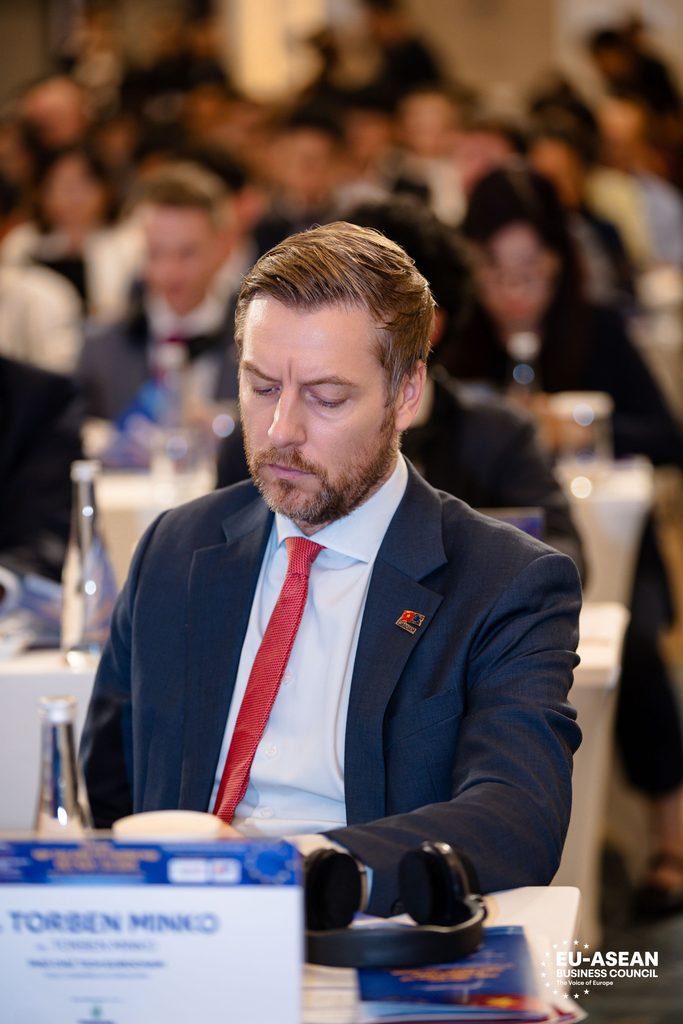
Indeed, according to EuroCham’s Business Confidence Index (BCI) Report for the third quarter of 2026, 90% of surveyed businesses were willing to recommend Vietnam as a destination for business and investment, while 23% had a long-term outlook extending beyond 20 years.
In the panel discussion session, EuroCham Vice-Chair Jean-Jacques Bouflet also highlighted that Vietnam is well positioned to remain competitive. To sustain this advantage, it will be important to build on the EVFTA, support the adaptability of Vietnamese businesses through timely and comparable standards, and ensure that regulatory measures are implemented consistently and do not create unnecessary obstacles to trade.
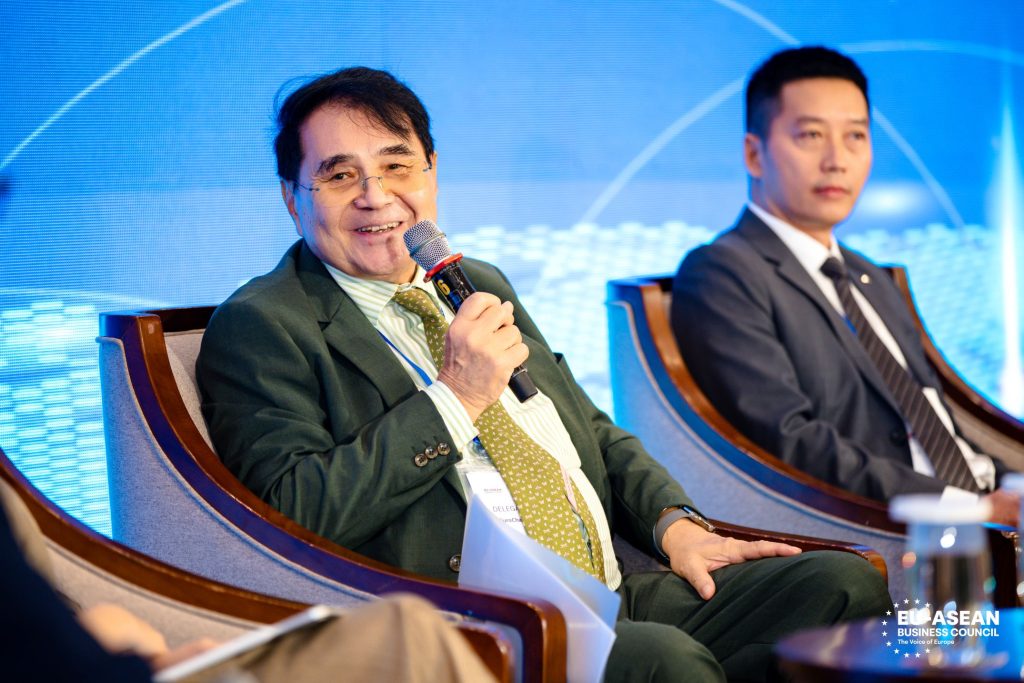
EuroCham remains committed to representing the voice of the European business community in high-level forums. Through active advocacy work and data-driven business intelligence, we are proud to contribute to the strengthening trade relationship between Vietnam and the EU.
Special thanks to the EuroCham delegation for their contributions:
- Mr. Torben Minko – Vice-Chair
- Mr. Jean-Jacques Bouflet – Vice-Chair
- Mr. Nguyen Hai Minh – Vice-Chair
- Ms. Delphine ROUSSELET – Executive Director
- Ms. Van Nguyen – Head of Office Hanoi cum External Relations Manager
- Ms. Huyen Dang – Advocacy Manager