
[Ho Chi Minh City, 15 October 2026] EuroCham’s Business Confidence Index (BCI) holds strong at 78.3 in Q3 2026, remaining historically high despite global economic uncertainties. Yet, beneath this resilience lies a more complex business reality: respondents report an average of 8 operational challenges that constrain growth, while 93% are affected by regulatory and administrative issues, and an equal proportion by tax and financial administration.
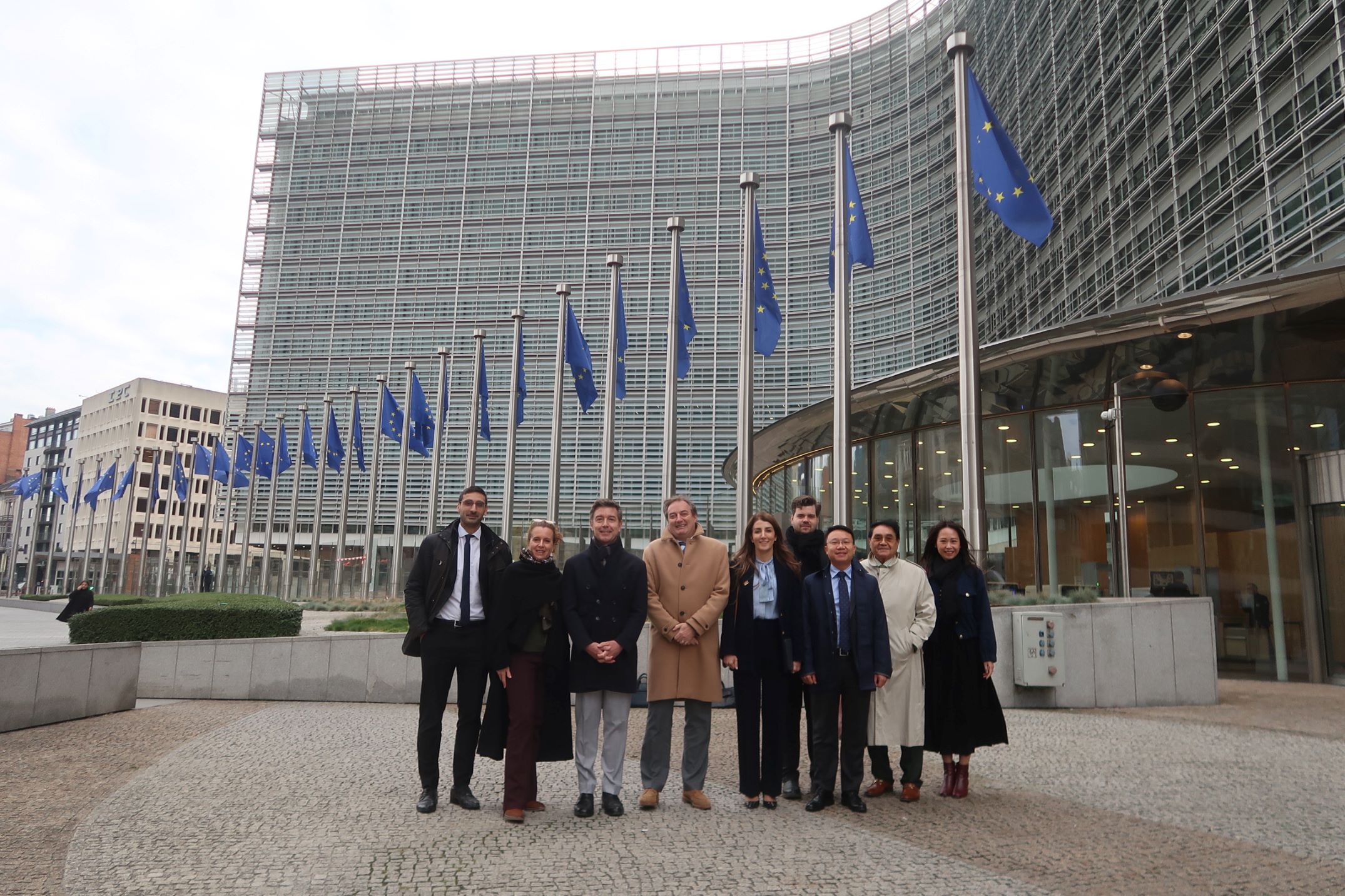
This quarter’s findings capture a defining tension in Vietnam’s economic trajectory: strong investment confidence alongside persistent friction in the day-to-day business environment. These insights will also be an essential part in EuroCham’s Annual Mission to Brussels from 19–22 October 2026, bringing the perspectives of businesses operating Vietnam to European policymakers, strengthening dialogue on Vietnam’s development priorities, as well as the role European expertise and long-term partnerships can play.
Conducted by DXL Research and Consulting, the Q3 BCI report points to a clear priority for Vietnam’s next growth chapter: ensuring that economic momentum is matched by more predictable, efficient conditions under which businesses operate, invest and create value.
Confidence holds, sectoral and global pressures diverge

Explore the full BCI Q3 2026 report here: English version | Vietnamese version.
Click here for an in-depth look at the BCI score across various company sizes and sectors.
The BCI eased by 1.4 points from 79.7 in Q2, indicating a modest adjustment. While 64% of respondents describe their current business situation as good or very good, a substantial neutral bloc (28%) highlights a wait-and-see attitude as international demand remains plateaus and businesses look for policy momentum to translate into faster procedures and more predictable outcomes.
Sector analysis tells a more varied story. Agriculture & Food Value Chain recorded the strongest improvement, rising 11.7 points to 83.9, despite continued pressure on input costs and competition from regional imports. Trade, Logistics & Consumer Goods also remained strong, reflecting Vietnam’s role in regional production and cross-border commerce. By contrast, Tourism & Hospitality fell 22.5 points to 67.9 after a strong previous quarter. Its decline highlights how quickly consumer-facing businesses can feel the effects of changing spending patterns, operating costs, and external disruption, including recent extreme weather.
Market exposure also shapes sentiment. Businesses focused on Vietnam recorded confidence of 80.4, compared with 73.2 among EU-focused firms, 70.7 among US-focused firms and 73.9 among ASEAN-focused firms. These differences are consistent with the uneven pressures facing businesses across markets, although the survey does not establish a single cause. Global trade presents a similarly mixed picture. On 8 October, the World Trade Organization raised its forecast for global merchandise trade growth in 2026 to 3.9%, while lowering its outlook for commercial services trade amid disruption linked to the Middle East conflict. The divergence reinforces the importance of assessing opportunities alongside exposure to external shocks.

EuroCham Chairman Bruno Jaspaert commented: “Vietnam’s is on a remarkable winning streak. With GDP growing by 9.95% year on year in Q3 and by 9.01% over the first nine months, the country is moving closer to its ambition of double-digit growth at a time of considerable global uncertainty. While we celebrate this momentum, national growth figures do not tell the whole story. Local supply chain managing rising raw material and salaries costs, manufacturing plants importing their next production line and re-engineering their sourcing grounds, or an F&B distributor facing weaker demand and new taxes: they all face pressures that can limit the businesses’ ability to contribute to, and benefit from, growth. The important task now is to make growth more tangible across the economy: by improving predictability, strengthening resilience and consolidating reforms, enabling businesses to devote more of their energy to creating value.”
The hidden cost of doing business
A high confidence score does not mean that doing business is easy. This quarter, the BCI looks at the cumulative burden of growth constraints, recognising that companies rarely have to face just one obstacle at a time.

On average, each business must navigate eight challenges to grow. Nearly four in five respondents (77%) face at least five, while one in six (16%) grapples with 14 or more. For businesses in sectors particularly exposed to regulatory complexity, including Trade & Logistics, Healthcare, and Agrifood, the declared burden can reach up to 27 administrative hurdles at once.
The most frequently cited individual obstacles are administrative procedures and paperwork (60%), unclear or inconsistently applied regulations (53%), tax administration-related issues (52%), and talent shortages (49%). Reports about customs delays and disputes have also risen this quarter.
At the broader level, 93% of businesses report some impact from regulatory & administrative challenges, as well as tax & financial procedures, that limit their organisation’s growth, with 42% reporting significant impacts on their operations. Legal frameworks and public procurement, as well as customs clearance and tariff compliance, also create substantial pressures, with 36% and 33% of businesses respectively reporting significant impacts.

The pressure varies across business profiles. Regulatory and administrative challenges are reported by more than half of firms in every sector and reach 96% in Healthcare & Life Sciences. In such regulated industries, delays or inconsistent interpretations can complicate approvals and slow down products’ market access. For manufacturers and tourism operators, tax-related processes add to the increasing demands of controlling costs and uncertainty of planning expenditure.
The relationship with business sentiment is equally telling. Among respondents with a neutral or negative outlook for Q4, 67% cite unclear or inconsistently applied regulations and the same proportion cite burdens from administrative procedures. Talent shortages are also cited by 60% of respondents with a neutral or negative outlook, 17 points above the positive-outlook group.


The link extends to Vietnam’s investment appeal. Unclear regulations show a 29-percentage-point gap between businesses likely and unlikely to recommend Vietnam as an investment destination. HS code classification and international standards recognition also stand out, with 48% and 45% of respondents respectively reporting these challenges. This is a significant concern for an economy whose competitiveness depends heavily on international trade and integration into global value chains.
The costs are often incremental rather than dramatic: time spent clarifying requirements, reconciling different interpretations or preparing documents again. But when these demands accumulate, they can divert money and attention away from improving products, developing talents and serving customers.
Chairman Jaspaert articulated: “A simple and transparent legal framework containing good guidance and upholding strong standards is essential to a competitive economy. What makes the difference is knowing what is required, receiving consistent guidance, and having a reasonable sense of how long a process will take. When that certainty is missing, even routine tasks can take more time and energy than they should. Making procedures clearer and more predictable would help businesses focus on what they do best: creating jobs, serving customers and investing for the future.”
Long-term investment creates an opportunity for higher-value, greener growth
Despite the challenges businesses face today, confidence in Vietnam’s future remains strong. Nine in ten respondents would recommend Vietnam as an investment destination; 63% plan their operations for more than five years, and 23% look beyond a 20-year horizon.

Vietnam’s appeal is praised for a combination of practical strengths and long-term potential. Human capital (52%), cost competitiveness (51%) and political and macroeconomic stability (44%) remain leading competitive advantages, complemented by its domestic market (42%), the large network of free trade agreements (33%) and its strategic position amid shifting global supply chains (30%). Sustainability is also emerging as part of the investment proposition: nearly one in five respondents recognise the Government’s commitment to sustainable growth, with this consideration more prominent among large enterprises.
As businesses reconsider supply chains in response to global tensions and shifting trade relationships, Vietnam is increasingly positioned as more than a competitive production base: it has become a strategic hub connecting regional growth with global markets. The rise in registered FDI to $50.36 billion in the first nine months of 2026, alongside $21.07 billion in realised investment, a five-year high, adds to this picture of sustained investor interest.
Yet confidence is not uniform across the business community. While 97% of companies with more than 500 employees would recommend Vietnam as an investment destination, smaller firms are more cautious, with 14–17% of businesses employing 1–50 people unlikely to endorse Vietnam for investment. This gap highlights an important priority for Vietnam’s next phase of growth: ensuring that businesses of every size can navigate the operating environment and contribute to the country’s development.
Vietnam and Europe have a natural basis for partnership, with small and medium-sized enterprises (SMEs) playing a central role in both economies. Many are family-owned businesses, built on generations of experience and deeply rooted in their communities. While large enterprises bring scale to manufacturing, infrastructure and the green transition, SMEs contribute specialised technologies, innovation, expertise and employment, often creating economic value well beyond the size of their investments.
Resolution No. 10/NQ-TW offers a timely opportunity to recognise and strengthen these complementary contributions. By emphasising investment quality, technology transfer, innovation and domestic supply chains, it encourages a broader measure of investment success; one that considers not only capital attracted, but also the capabilities, knowledge and opportunities created within Vietnam’s economy.
The opportunity is not to choose between large investors and SMEs, but to help them grow together. Major projects can generate demand and open markets, while smaller enterprises provide specialised capabilities, strengthen local suppliers and help Vietnamese businesses move into higher-value activities. Achieving this requires an investment environment that supports businesses of all sizes, with clear regulations, predictable procedures, and stronger connections between foreign investors and domestic enterprises.
Turning reform into a competitive advantage
Businesses are clear about what would help them invest and operate with greater confidence. Faster administrative decisions are cited by 37% of respondents, while 35% call for better alignment with international standards and another 35% prioritise faster, fully digitalised government services.
The priorities vary across sectors and company sizes. Faster decisions matter particularly in Agriculture, Business Services and Manufacturing; standards alignment is especially relevant to Healthcare and Trade; and digitalisation leads among Tourism businesses. Smaller firms place greater emphasis on faster decisions and more efficient tax and customs processes, while mid-sized and larger businesses also highlight digitalisation and meaningful regulatory consultation. The common thread is a desire for a business environment in which time and resources can be directed towards building the future, rather than navigating uncertainty.
Xavier Depouilly, General Manager of DXL Research & Consulting, noted: “This quarter’s BCI once again highlights a persistent concern for businesses in Vietnam: the heavy administrative burden, particularly around tax and customs procedures. Despite major administrative reforms and ongoing digitalisation, businesses continue to report overlapping requirements, with online procedures often accompanied by paperwork. Every hour spent navigating these processes is time taken away from investment, innovation, and growth. Beyond the overall figures, the BCI reveals how these challenges differ across sectors and business sizes. By identifying where the main constraints lie, the research provides valuable evidence to help policymakers better understand the practical barriers facing investors and SMEs, and support more targeted improvements to Vietnam’s business environment.”
For EuroCham, these findings are concrete points for constructive engagement: working with Vietnamese policymakers to make regulation more predictable, connect foreign investment more closely with domestic enterprise, and support growth that is competitive, inclusive and sustainable.
EuroCham Chairman Bruno Jaspaert concluded: “A strong partnership is much like a tree: its value lies not only in how tall it grows, but also in the roots it puts down and the shelter it offers beyond itself. Many European businesses see Vietnam as a place to put down roots for the long-term, growing alongside Vietnamese partners and contributing to a future neither could build as strongly alone. But strong roots need a supportive environment to flourish. And in this particular case, we need to tell the world, especially Europe, how easily trees can take root in Vietnam. This is the spirit behind the evolution of our flagship Growth Economic Forum & Exhibition 2027: Where Green Meets Growth. Taking place in Ho Chi Minh City from 9–11 March 2027, GEFE27 will bring business, policy and innovation together around a shared question: how can we make growth not only faster, but more resilient, more sustainable and more widely shared? Because ultimately, the measure of a successful partnership is not how much either side gains alone, but how much more becomes possible together.”
###
About EuroCham Vietnam
Founded in 1998, the European Chamber of Commerce in Vietnam (EuroCham) has established itself as the unified voice of the European business community in Vietnam. With offices in Hanoi and Ho Chi Minh City, we represent a diverse spectrum of companies, ranging from small and medium-sized enterprises to multinational corporations. EuroCham plays a crucial role in shaping policy dialogues, fostering bilateral trade and investment, and fortifying economic ties between Europe and Vietnam, particularly within the framework of the EU-Vietnam Free Trade Agreement (EVFTA).
EuroCham Vietnam boasts a substantial membership base comprising over 1,400 companies, solidifying its position as one of the largest foreign chambers operating in Vietnam. We unite eight prominent national European business associations in Vietnam, which include:
EuroCham’s diversified influence is underpinned by our extensive network of 19 specialised Sector Committees. Serving as think tanks within their respective industries, these committees provide invaluable expertise, steer policy recommendations, and stimulate industry-specific dialogues. This organisational framework guarantees that the concerns and viewpoints of diverse sectors are actively considered, thereby moulding EuroCham’s cross-sectoral agenda and magnifying its overall influence.
For more information about EuroCham, visit: www.eurochamvn.org.
For media enquiries, please contact:
EuroCham’s Senior Media & Communications Officer
Ms. Tram Hoang – tram.hoang@eurochamvn.org